I originally shared this as a series of posts on Bluesky and Threads, but it’s so important to me that I had to write this article and expand on my points. Please note that this is my POV and nothing has been confirmed by showrunner Terry Matalas or actor Todd Stashwick.
As VisionQuest is releasing week by week – and Paladin is a side character – it took three episodes for me to suspect that our anti-hero is neurodivergent. It’s the scene after his run-in with Jocasta that flipped the realisation for me, because once I’d got past the humour of his return to the van, what happened dawned.
I mean, it is funny. Todd’s comedy chops are in full play and his delivery is as dry as a (dog’s) bone. Watching it repeatedly, though, it’s the blank look at the boy, followed by the glance at the side of the van. He’d forgotten about the logo plastered on the side.
This is called “Working Memory Deficit”, where if something is out of sight, it’s out of mind. It’s why ADHDers are forever forgetting and losing things. Here, Paladin’s mind is on the pain of his injuries and that literally doesn’t leave the mental bandwidth to recall the cover story.
Once I’d recognised this (I’m diagnosed ADHD), I began to look at his other scenes. Time and again, I caught little hints that perhaps only someone who’s neurodivergent would catch.
Snipey & the Prison Guard
Having a strong sense of justice is part of being ADHD and autistic. So being a mercenary is a very natural career for Paladin, especially with his strict moral code. With both “Snipey” (the minion who kills Fiona) and the sadistic prison guard, his reaction is immediate… and cold. He doesn’t lose his temper, just rights the wrong he’s witnessed.
One Drink or Two?
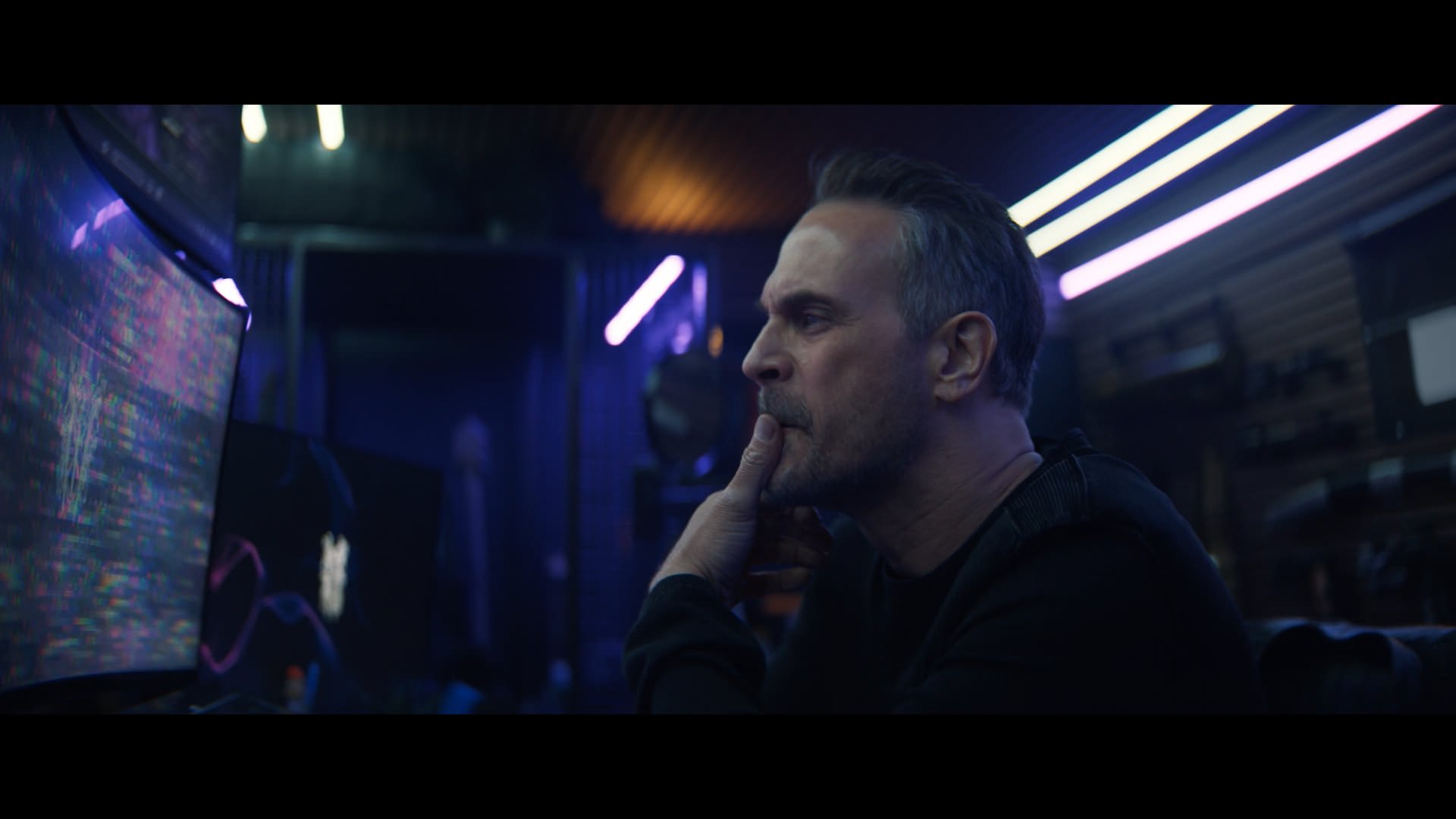
During the scene where Paladin is researching Westview, Todd sits with one hand curled under his chin and his thumb over his mouth. It’s a position that anyone with a passing knowledge of his coffee chats would recognise and I did make the comment that I wasn’t sure if he was acting or not.
Someone replied that it was just missing the mug of coffee, but there was a cup. Black, exactly how he takes it in real life, which he stirs, puts down, and then abandons in favour of pouring a whiskey.
I mean… *eyes the glass of water beside the mug of hot chocolate* Yeah.
Emotional Disconnect
I’ve already touched on this, but episode 3 really reveals how much Paladin distances himself from anything that might evoke an emotional reaction. There’s a flashback to his childhood which shows his father as being a bully at best, downright abusive at worse.
Maintaining a tight hold of emotions is Rejection Sensitive Dysphoria in action. RSD causes pain when slightly (or one is perceived) but it can also cause emotional spirals and disconnect. Learned experience leads to avoiding situations and relationships – possibly why Paladin is overly practical during his chats with his handler.
Loss of that control is the driving fear during his confrontation with Jocasta. He doesn’t want to confront his past and he definitely doesn’t want anyone else knowing about it. Still, the practicality comes in again both in how he manufactures an escape and that he takes it rather than seeking revenge.
ADHDers are incredibly good during a crisis.
Breaking Point
At the time of writing, how Paladin handles the termination of his contract isn’t known. It’s an unusual situation, perhaps even unheard of: he’s used to getting his mark, regardless as to the physical harm he takes in doing so. He tells his handler that “bumps and bruises are part of the job.” Cold, emotionless, practical – everything I’ve covered so far.
Until the call from the client. Suddenly, Paladin is desperate, fighting to keep his oath. He even goes as far as to offer waiving his fee. The money isn’t important – the gig is everything.
Being neurodivergent isn’t always caught early. Even when it is, there’s still a period of time where you know you don’t fit into the norms. Where you feel like an outsider. I think Paladin had this experience which is why being chosen to take the role became his touchstone. He is the role and without it, he becomes… lesser. Jocasta wasn’t far wrong.
Representation, Baby
So why does all this matter? To someone who is neurotypical, it probably doesn’t. It might not to all those who have ADHD – I’m not going to pretend we’re a monolith. But for me, as a late-diagnosed woman whose very reason for seeking diagnosis was Todd Stashwick, it’s beyond important.
It’s seeing the duality of being incredibly smart but also missing the finer details on screen. Of seeing a character deal with the complexity of emotions that don’t always make sense. Or recognising why he’s sarcastic and droll, because I’m exactly the same way.
It matters because Paladin is a strong character who isn’t defined by his neurodiversity, but in part carries on regardless. The other part just deals with it in a somewhat blaise manner. Because there is no choice when you’re born this way.
